
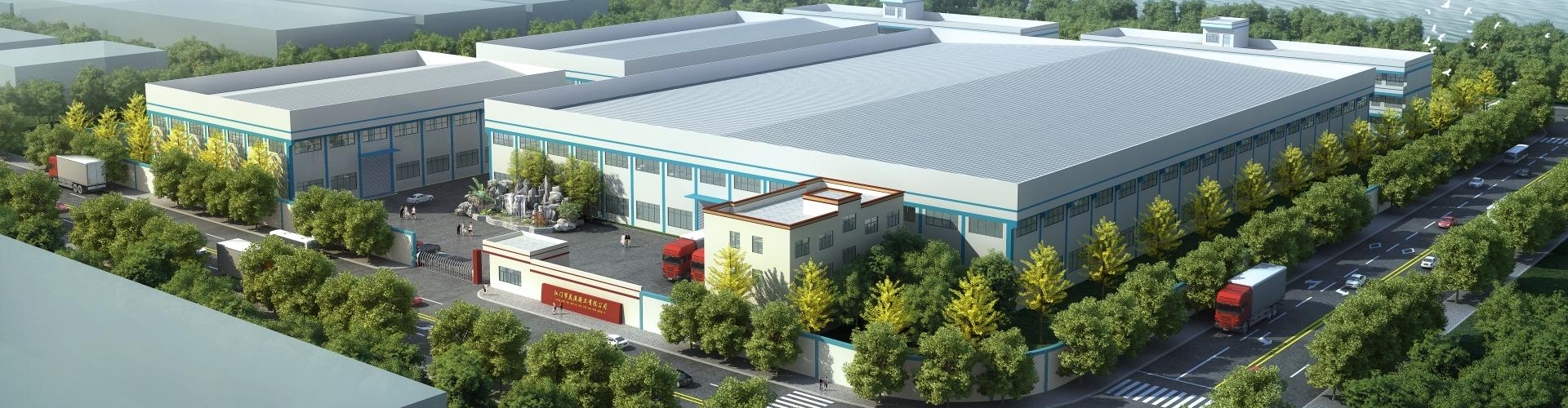
Automated production has become an important factor in improving the quality, consistency, and efficiency of stainless steel cabinet manufacturing. As modern home projects require higher standards for appearance, durability, and customization, manufacturers need advanced production systems to maintain stable results across different order volumes.
A professional stainless steel cabinet manufacturer does not rely only on manual skills. Instead, advanced equipment, digital production management, and standardized processes work together to improve accuracy and reduce production risks. Automation helps manufacturers control every stage, from material processing to final inspection.
According to the International Federation of Robotics, global industrial robot installations have continued to increase as manufacturers adopt automation technologies to improve productivity and manufacturing precision. This trend shows how modern factories are using technology to create more reliable production systems.
The difference between a manufacturer and a trader is the ability to directly manage production quality. Traders mainly coordinate existing products, while manufacturers control manufacturing processes, equipment operation, material handling, and quality inspections.
Automated production provides several advantages:
Higher processing accuracy
More consistent product quality
Reduced production variation
Better production efficiency
Improved bulk supply capability
For stainless steel cabinets, even small differences in cutting, bending, or assembly can affect installation accuracy and final appearance. Automated systems help maintain consistent dimensions throughout large production quantities.
A complete manufacturing process overview includes multiple stages where automation can improve efficiency and quality.
Modern stainless steel cabinet production may include:
Automated material cutting
Precision forming and bending
Controlled welding processes
Automated surface treatment procedures
Digital production tracking
Final quality inspection
Compared with fully manual production, automated equipment helps reduce human errors during repetitive operations while maintaining stable production standards.
For example, precision cutting systems can improve dimensional accuracy, ensuring cabinet components fit correctly during assembly. This is especially important for customized stainless steel kitchen cabinets, bathroom cabinets, wardrobes, and complete home solutions.
Automation also improves the management of raw materials. Stainless steel furniture requires strict material standards used throughout production to maintain durability and appearance.
SUS304 stainless steel is commonly used in home applications because of its corrosion resistance and long service life. According to the International Stainless Steel Forum, stainless steel achieves corrosion resistance through a chromium content of at least 10.5%, which creates a protective passive layer.
Automated material management helps manufacturers control:
| Material Management Area | Quality Improvement |
|---|---|
| Material Identification | Prevent incorrect material usage |
| Cutting Accuracy | Reduce material waste |
| Production Tracking | Improve order management |
| Process Monitoring | Maintain stable output |
This creates a stronger foundation for consistent stainless steel cabinet production.
Automation does not replace customization. Instead, it provides a stronger foundation for flexible OEM and ODM process management.
A professional manufacturer can combine automated production with engineering experience to support customized requirements, including:
Different cabinet dimensions
Customized surface finishes
Special structural designs
Project-specific specifications
The OEM and ODM process usually includes design review, engineering optimization, prototype testing, and mass production. Automated equipment helps ensure that approved samples can be reproduced accurately during larger production runs.
Quality control is more effective when inspection is integrated with production. Automated systems allow manufacturers to monitor key parameters and improve quality control checkpoints.
| Inspection Stage | Automation Advantage |
|---|---|
| Material Inspection | Faster identification of material issues |
| Cutting Inspection | Improved dimensional accuracy |
| Assembly Inspection | More consistent fitting performance |
| Surface Inspection | Better appearance control |
| Final Inspection | Stable shipment quality |
According to ISO 9001 quality management principles, controlling processes during production is essential for achieving consistent product quality. Automation supports this approach by creating more measurable and repeatable manufacturing procedures.
Large cabinet orders require stable production capacity and consistent quality. Automated production systems help manufacturers handle bulk supply requirements while maintaining the same product standards across different batches.
For large projects, a practical project sourcing checklist should consider:
Production capability
Equipment level
Quality management system
Material control methods
Delivery planning
Export experience
Factories with advanced production systems can better manage large-volume orders because automation improves scheduling accuracy and reduces production fluctuations.
International markets require manufacturers to maintain stable quality, accurate specifications, and reliable documentation. Automated production supports export market compliance by improving product consistency and production traceability.
Manufacturers can better manage:
Product specifications
Quality records
Packaging standards
Production schedules
Shipment preparation
This capability is especially valuable for stainless steel furniture suppliers serving different regions with various requirements.
Automation improves more than production speed. It strengthens the entire manufacturing system by improving accuracy, consistency, and quality management.
At Meiao, we combine manufacturing experience, advanced production methods, and strict quality control systems to create reliable stainless steel home solutions. Through professional OEM and ODM capabilities, optimized manufacturing processes, and continuous improvement, we provide stainless steel cabinets designed for modern residential and commercial applications.
A high-quality cabinet is the result of precise materials, skilled engineering, and reliable manufacturing technology working together.